
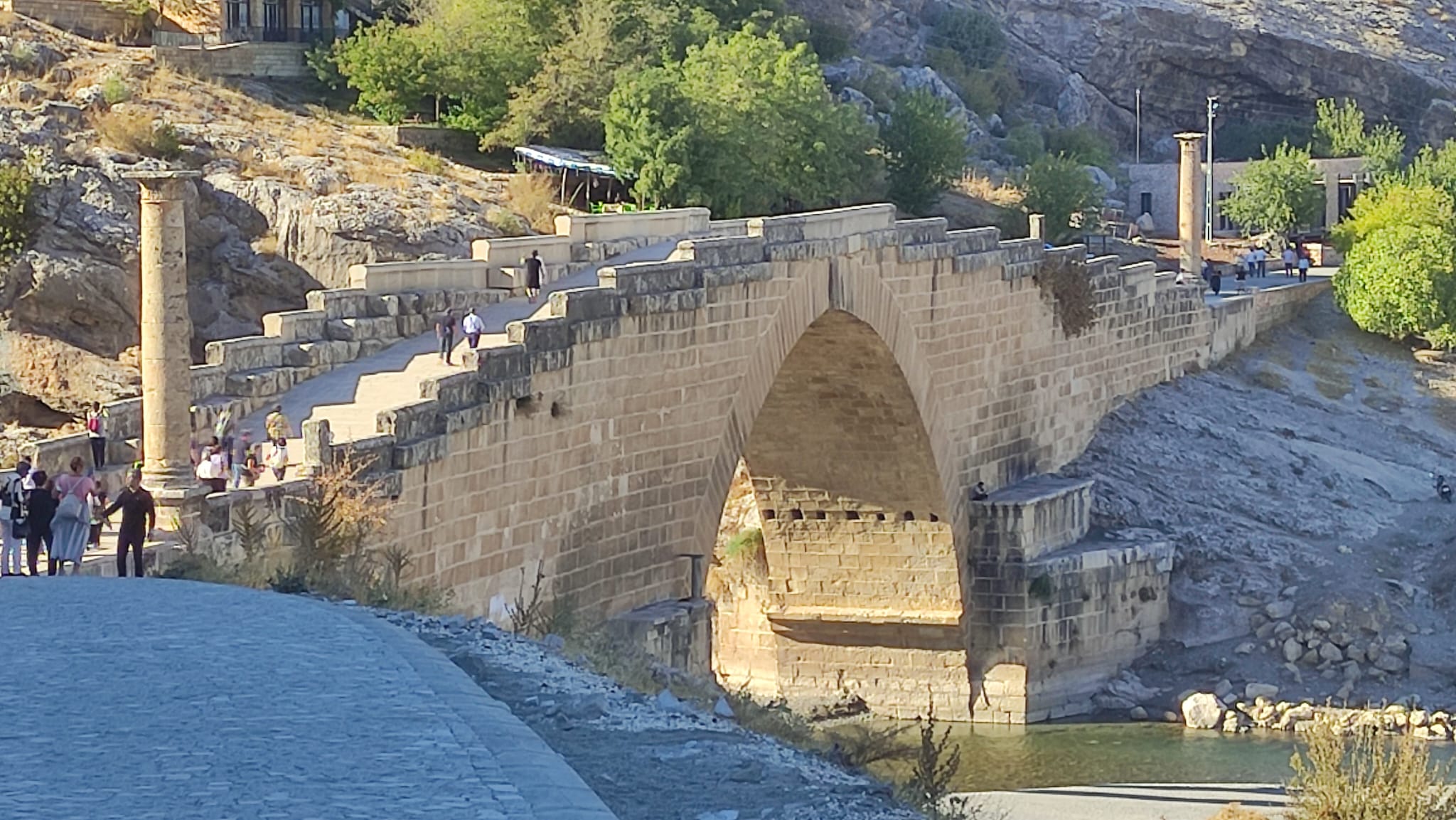
Where is Mesopotamia? Mesopotamia History
Mesopotamia is a historical region where human civilization achieved many milestones for the first time. Ancient Mesopotamians developed mathematics, invented the wheel, and shifted to agriculture. They drank the first beer and created the first megacities in history.
However, where was Mesopotamia? Why is Mesopotamia's history relevant? Let's seek an answer to these questions!
Where is Mesopotamia?
Let's begin with a key question: Where is Mesopotamia? Although Mesopotamia refers to a specific historical region located in Western Asia, encompassing Syria, Iraq, and Turkey, it lacks actual physical borders. Mesopotamia means "(the land) between rivers," referring to the rivers of the Euphrates and Tigris. These Mesopotamia rivers flow from Eastern Turkey into the Persian Gulf. If you look at a Mesopotamia map, you will realise how the region covers the land between and around these rivers.
A historically fertile land, Mesopotamia was the birthplace of many early civilizations in antiquity, like Sumer, Akkad, Babylonia, and Assyria. Of course, Mesopotamia's importance isn't limited to this historical period. Even today, the region has vital geopolitical importance, thanks to its natural resources and cultural value.
Across Mesopotamia are many historical cities. The region is home to the ruins of some of the earliest settlements, such as Göbeklitepe and Çatalhöyük.
Mesopotamia History
The history of Mesopotamia is one of grandeur and competition. The written history of ancient Mesopotamia dates back six thousand years. During the 3rd millennium BC, the region was home to various local dynasties until the Akkadian Empire conquered the area.
In the following millennium, Assyrians, Babylonians, and Hurrians reigned over Mesopotamia. With the rise of the Hittites, a new chapter in the region's history began, as they established complete control over Mesopotamia. At the end of the 2nd millennium BC, however, the Bronze Age Collapse occurred, with invaders from surrounding regions attacking and settling in the area.
In the following millennium, the Neo-Assyrian and Neo-Babylonian empires briefly ruled Mesopotamia. After Alexander the Great conquered the region, a long-lasting Greek rule began, only ending after the Persians pushed westward. From the 2nd century AD to the Arab conquest in the 7th century AD, the region was under the control of the Roman Empire.
Historians often point to the Arab conquest in the seventh century AD as the end of Mesopotamia as a significant historical region.
Major Cities and Empires of Mesopotamia
Mesopotamia was home to many major cities and empires throughout history. Some of the most prominent ones are:
Babylon
Babylon was the capital of the ancient Babylonian Empire. Historians believe that it was the first city to reach 200,000 inhabitants in world history, making it the first megacity. Although its ruins are largely gone by now, the ancient city is within the modern-day town of Hillah in Iraq.
Göbekli Tepe
Göbekli Tepe is the world's oldest known settlement, inhabited from around 9500 BC to at least 8000 BC. Located within Şanlıurfa Province in Turkey, Göbekli Tepe boasts large circular structures with anthropomorphic details.
Nineveh
Nineveh was an ancient city in Upper Mesopotamia. The largest city of the Neo-Assyrian Empire, it was the symbol of Assyrian imperial power. Today, the settlement's ruins are within Mosul, an Iraqi city.
Çatalhöyük
A prehistoric settlement established around 7100 BC, Çatalhöyük was a proto city that followed no clear city planning. As a result, the settlement only consisted of domestic dwellings, lacking public structures. Today, the well-preserved Çatalhöyük Archaeological Museum offers visitors a close look at the ancient settlement.
Ur
A historic port city, Ur was a Sumerian city-state that was once prosperous. Today, the city is located at the site of modern Tell el-Muqayyar. Although it no longer has the grandeur it once boasted, Ur is still a popular destination for archaeology enthusiasts.
Mesopotamian Culture and Inventions
The early Mesopotamian culture was rich and diverse. Since the ancient region consisted of many different civilizations, it was an early melting pot. In this multicultural region, new ideas and concepts quickly flourished, leading to some of the earliest examples of city planning and science.
The wheel and writing are two of the most prominent inventions that the Mesopotamians achieved. Furthermore, astronomy, and based on that, astrology, were also developed in ancient Mesopotamia. Since the region was home to organised states, they also quickly developed mathematics to calculate taxes and supplies. It can also be said that one of the earliest examples of legal code was created in Mesopotamia.
Dividing time into small units was also a concept developed by the Mesopotamians, whose system of dividing time into 60 units evolved into our 60-second minutes and 60-minute hours.
Culinary inventions were also among the creations of the Mesopotamian Culture. Although similar beverages were invented in other parts of the world, beer as we know it today was first created in Mesopotamia and sold in local inns.
Must-Visit Ancient Mesopotamian Sites
Are you planning a history-filled journey to Mesopotamia? Below, you can find some of the must-visit ancient Mesopotamian sites in Turkey.
1. Mount Nemrut
Mount Nemrut is a towering mountain in Adıyaman province of Turkey. Atop this mountain are the ruins of an ancient tomb-sanctuary. Assumed to have been erected as a royal tomb in the 1st century BC, the expansive structure is well-preserved and offers a glimpse of the region's rich past. Nemrut and Urfa tours might be the perfect opportunity to explore this historical wonder.
2. Göbekli Tepe
A spectacular structure in the middle of one of the oldest Mesopotamian cities in Turkey, Göbekli Tepe, is where the earliest history of humankind lies. Believed to have been built by early hunter-gatherers and used as both a temple and a settlement, this archaeological wonder is a must-see for all culture enthusiasts.
3. Çatalhöyük
Çatalhöyük is one of the best examples of ancient proto-cities, early settlements that humans used in antiquity to form communities and protect themselves from the outside world. Although these proto cities lacked a central rule and were basically houses built together, they served as the first models of our modern cities. If you travel to Konya, Turkey, you must add Çatalhöyük to your itinerary for an insightful trip back in time.
4. Mardin
Although it isn't a single site, the ancient city of Mardin is one of the most magical places in Turkey. This settlement is home to over 100,000 people today and is known as one of the most picturesque cities in the entire country. Preserving its distinctive architecture and multicultural nature, Mardin is a must-visit for anyone seeking a culture-filled getaway. Not to mention that Mardin has one of the most delicious cuisines in Turkey and offers many savoury dishes to visitors.
5. Şanlıurfa
Another famous Mesopotamian city, Şanlıurfa, is home to Göbekli Tepe and many other ancient settlements. While the modern-day Şanlıurfa was founded around the 4th century BC, the region had already been inhabited by various peoples in previous millennia. In fact, historians believe that Şanlıurfa was where the agricultural revolution began in the Near East. Thanks to this cultural and historic wealth, throughout its history, Şanlıurfa was a prominent city for the civilizations that ruled over it.
If you are looking for a trip to explore the wonders of Şanlıurfa and other Mesopotamian sites, our Mesopotamia tour might be the perfect choice for you.
Mesopotamia Travel Guide
Are you traveling to Mesopotamia soon and wondering what some essential tips you must know? Here is a brief travel guide for you:
Where to go in Mesopotamia?
Rock Valley Travel's Eastern Turkey tours include an amazing Mesopotamia trip, which encompasses much of the Mesopotamian region in Turkey, as well as Cappadocia. This might be the ideal way to explore the Turkish side of the Mesopotamia, which includes the oldest settlement on earth, Göbekli Tepe, and some of the earliest proto cities.
What to See in Mesopotamia?
Although there are many different destinations you can go to in Mesopotamia, some of the must-see places are:
- Şanlıurfa
- Mardin
- Gaziantep
- Mount Nemrut
- Diyarbakır
- Cappadocia
What to eat?
Mesopotamia is a large region that covers various cities and other subregions in Turkey. Therefore, the cuisine significantly differs from one city to another. However, if you are visiting Mesopotamia, you should try the local breakfast, which is usually very rich in ingredients and delicious spices. Furthermore, each city in Mesopotamia has its own version of kebabs, such as the famous pottery kebab of Cappadocia or Urfa kebab of Şanlıurfa.
Tips to Know
Here are some tips that might be of help for your trip to Mesopotamia:
- If visiting in summer, bring lots of water with you, the region tends to be scorching hot,
- Remember that tap water isn't for drinking in Turkey,
- Although paying by card is universal in Turkey, some establishments might be cash-only; so, carry cash,
- Respect local customs, especially when visiting religious establishments,
- Pack light, breathable clothing with walking shoes.
Mesopotamia in Modern-Day Turkey
Much of the historic Mesopotamia lies within the Eastern Anatolia Region of Turkey. Its geographical borders begin near Cappadocia, with some considering Cappadocia a part of Mesopotamia and some considering it part of its borders. The most prominent Cappadocian cities in Turkey are Mardin, Diyarbakır, and Şanlıurfa.